South Australians are being asked to keep their eyes and ears open for a rare woodland bird that has declined dramatically across the Mount Lofty Ranges.
Researchers from Adelaide University are working to establish where the remaining Black-chinned Honeyeaters are living and what habitat they are using, with community sightings potentially helping guide future conservation efforts.
The bird was once widespread across the region but is now rarely recorded. ReBird the Ranges Coordinator Dr Wendy Telfer says even a single sighting could help researchers build a clearer picture of where the species survives.
“In the 1940s, when Donald Bradman was playing district cricket at Kensington Oval, the Black-chinned Honeyeater’s distinctive call would have been part of the soundtrack of the game,” she said.
“Today, records of the species are few and far between.”
The appeal comes amid a broader decline in woodland birds across the Mount Lofty Ranges. Of the 121 species found in the region, 78 are declining and 12 have already disappeared.
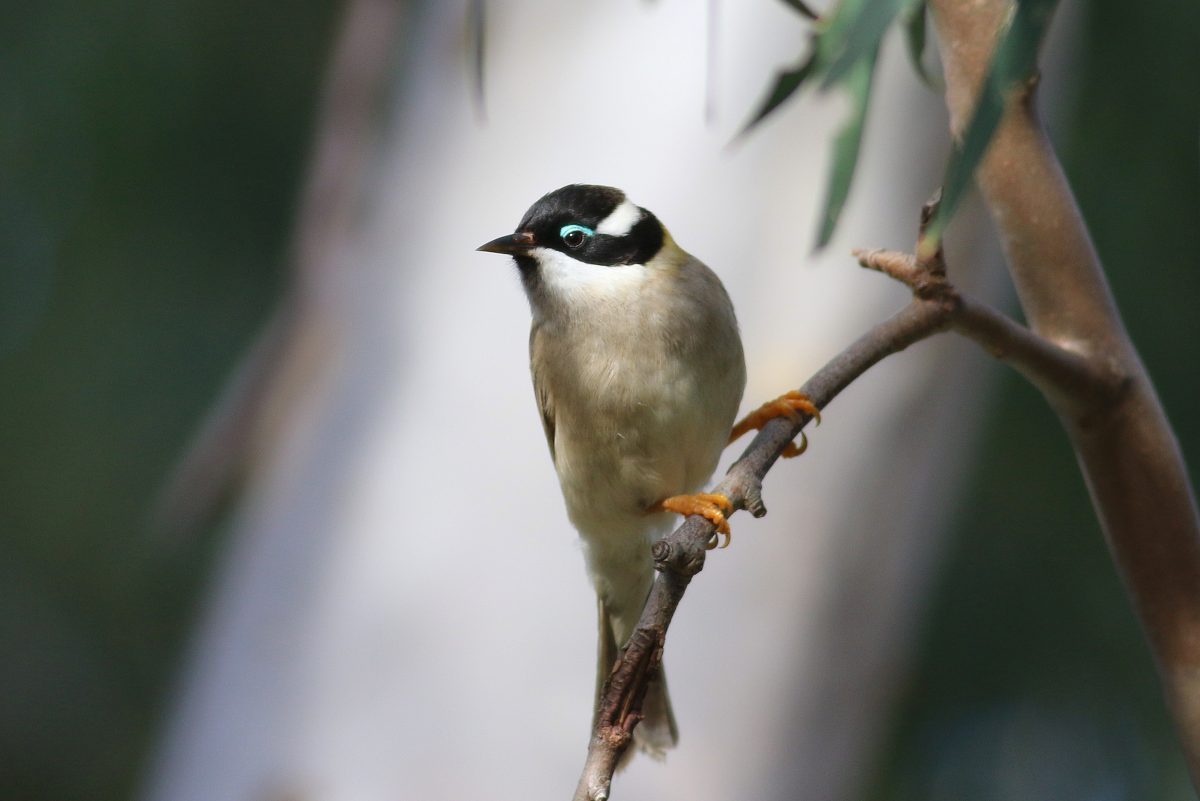
The Black-chinned Honeyeater is a small, olive-green bird with a distinctive black patch beneath its chin and bright blue skin above its eye.
It is often easier to hear than see, with a loud, musical call:
Audio by Eddy Smith, XC757091. Accessible at www.xeno-canto.org.
The birds usually feed high in the canopy of eucalypt woodlands, often near waterways, and can travel long distances in search of flowering trees.
Dr Telfer is encouraging people to listen out for the call and look into the trees while walking, birdwatching, working on rural properties or spending time outdoors.
“If you think you’ve seen or heard one, record and report it,” she said.
Sightings can be submitted through iNaturalist or Birdata, or emailed to ReBird the Ranges at info@rebirdtheranges.org. People are encouraged to include the location, date and time, along with a photograph or audio recording if available.
The information will be analysed alongside recordings collected through an acoustic monitoring program, with researchers using the findings to better understand where the birds remain and which habitats need protection.
The project is a collaboration between ReBird the Ranges, Adelaide University, Landscape Boards and local councils.
More information is available at rebirdtheranges.org.