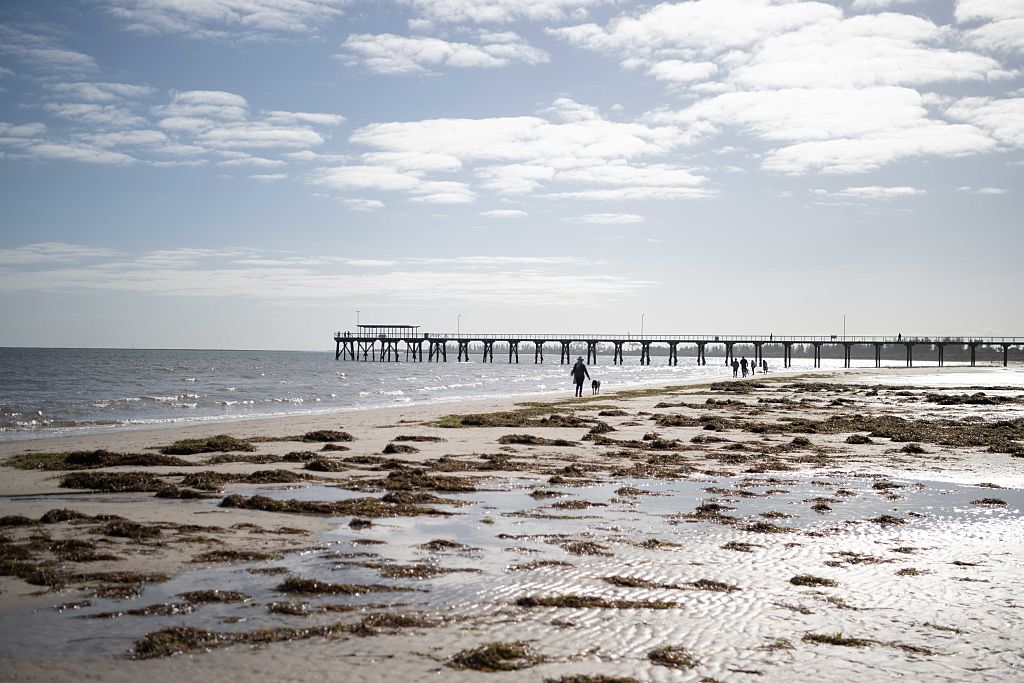
Nearly a year after a harmful algal bloom first appeared off South Australia’s South Coast, authorities say preliminary research points to a “convergence” of environmental factors behind the unprecedented outbreak.
The bloom, driven by the dinoflagellate Karenia, spread across coastal waters for months and remains active in parts of the state.
At a meeting of the state’s Algal Bloom Taskforce this week, marine scientist and South Australian Research and Development Institute executive director Mike Steer said three anomalous events had “primed the environment” for the bloom: River Murray flooding, a significant cold-water upwelling event and a marine heatwave.
Professor Steer said the combination of nutrient loading and calm, stratified ocean conditions created an ideal environment for the organism to thrive.
Environment Minister Lucy Hood said the preliminary findings were consistent with what government scientists had previously indicated, describing the bloom as the result of multiple overlapping pressures rather than a single trigger. She said the research would now undergo peer review before being publicly released.
Estuarine ecologist Faith Coleman, who resigned from two state advisory panels earlier this year, has questioned the suggestion that River Murray flooding three years ago significantly contributed to the event.
Dr Coleman said she had not seen evidence linking those flood-driven nutrient loads to where the bloom first developed, arguing other sources such as upwelling and stormwater may have played a larger role. She has called for the report to be made available once peer review is complete.
Authorities say the only active bloom area is currently along the south-west Yorke Peninsula, between Point Turton and Port Victoria, with monitoring showing low or no levels at metropolitan sites.