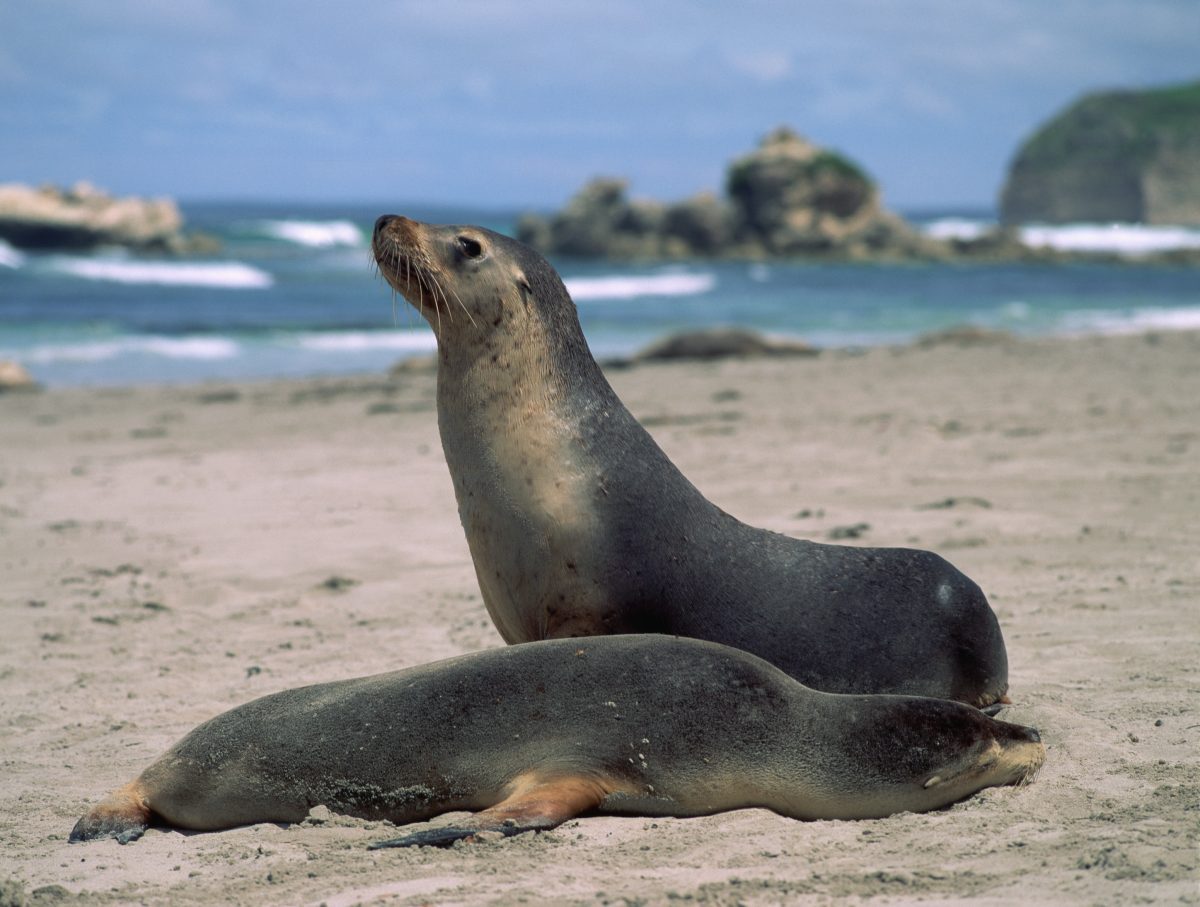
A second long-nosed fur seal is being tested for H5 bird flu in South Australia, just a day after the virus was confirmed in a mammal in Australia for the first time.
The suspected case has been detected at The Pages Conservation Park, two small islands off the coast of Kangaroo Island that are an important breeding site for the endangered Australian sea lion.
The development follows confirmation that a long-nosed fur seal found dead at Beachport on the state’s South East coast last week had tested positive for H5 bird flu – the first confirmed detection of the virus in an Australian mammal during the current outbreak.
Federal Environment Minister Murray Watt described the first mammal case as a “very serious development”, while warning Australians to expect further impacts from the virus.
Speaking to ABC News Breakfast, Mr Watt said the detection was “not unexpected”, and that Australia was likely to see more mass mortalities among birds and mammals.
“I know it’s a distressing thing for Australians to hear but we need to be realistic,” he told the ABC.
The latest suspected seal case is one of five new H5 bird flu events reported in South Australia today.
The other suspected detections involve greater crested terns at Osborne and the Coorong, and a white-fronted tern at Carpenter Rocks.
Samples from all five suspected events have been sent to the CSIRO’s Australian Centre for Disease Preparedness for confirmatory testing, with results expected in the coming days.
There are currently 194 confirmed H5 bird flu events recorded in South Australia, with another 27 suspected events awaiting results.
The Pages Conservation Park is of particular concern because of its importance to Australian sea lions, with the Invasive Species Council warning of potentially severe consequences if the virus reaches breeding colonies.
Invasive Species Council chief executive Jack Gough said the detection in a fur seal was significant because overseas outbreaks had shown mammal-to-mammal transmission among seals could lead to high mortality rates.
“If it gets into Australian sea lions though, this could be an extinction level event because fewer than 10,000 mature adults remain on Kangaroo Island and the WA coast,” he said.
Mr Gough said the country was still in the early stages of what he described as a devastating virus, and warned of further impacts on wildlife as it spreads between species.
Despite the confirmed mammal case and the growing number of suspected wildlife detections, there are still no confirmed H5 bird flu cases in poultry or other livestock in South Australia.
The South Australian Government says the risk to human health remains low.
Authorities are continuing surveillance across the state and are urging people not to touch sick or dead birds or other wildlife.
Sightings should instead be recorded and reported to the Emergency Animal Disease Hotline on 1800 675 888.